Can You Buy CBD Oil at Chemist Warehouse? An Australian Guide
By the Krush Editorial Team. Reviewed by Krush Healthcare Professionals. Last updated October 2026.
Search for CBD oil at Chemist Warehouse and the result on the shelf is going to disappoint you. Chemist Warehouse does not sell CBD oil over the counter anywhere in Australia. The hemp-labelled oils stacked in the vitamin aisle are hemp seed oil, which is a food-grade product with no cannabidiol content whatsoever. The actual cannabidiol oil you came looking for is a prescription-only medicine, and it is dispensed through a different pharmacy pathway altogether.
If you have been typing “cbd oil chemist warehouse” into Google and getting mixed results, this is the full picture. What the shelf product actually is, why cannabidiol sits outside that aisle, and the two legal routes Australians use to buy real CBD oil today.
Does Chemist Warehouse sell CBD oil
No. Chemist Warehouse does not sell cannabidiol oil, CBD tinctures, or any product containing CBD on retail shelves. This holds true across every Chemist Warehouse location in Australia — Victoria, New South Wales, Queensland, South Australia, Western Australia, Tasmania, the Northern Territory, and the ACT. The product category simply is not part of their over-the-counter range.
The reason is regulatory. Cannabidiol in Australia is listed as a Schedule 4 medicine by the Therapeutic Goods Administration, which puts it in the same prescription-only tier as blood pressure medication, antibiotics, or antidepressants. A product sitting in Schedule 4 cannot be sold without a doctor’s script, and even then it is dispensed through a specific medicinal cannabis pathway rather than taken off a general pharmacy shelf.
That is why Chemist Warehouse, Priceline, TerryWhite, Blooms, and every independent pharmacy in the country look the same when it comes to CBD oil — nothing cannabidiol-based is on the retail shelf. The products marketed with “hemp” branding are a different category of product entirely, and that is where most of the confusion starts.
What Chemist Warehouse actually stocks under the hemp label
The current Chemist Warehouse hemp range is built around hemp seed products. Most Australians who end up on the “hemp oil” shelf there pick up one of three or four variations.
Wagner Hemp Seed Oil is the headline product. It is usually sold in 60 or 300 capsule packs at around 1100 mg per capsule, marketed around joint comfort and general wellness. Melrose Organic Hemp Seed Oil is sold as a liquid in 100 or 250 millilitre bottles, pitched toward salad dressings and cooking. Blackmores and other mainstream vitamin brands have their own hemp oil variants. The hemp plant ingredients across all of these are legitimate — they come from Cannabis sativa, same species as the plants used to extract cannabidiol — but they are pressed from the seed only, not the flower or leaf material.
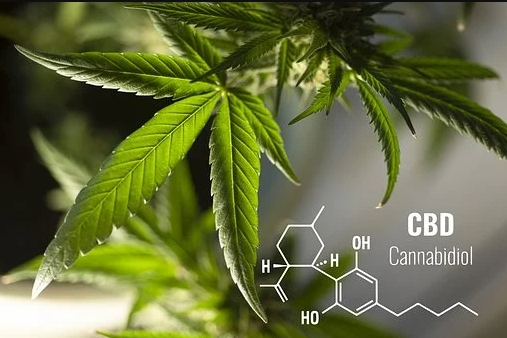
Hemp seed contains omega-3 and omega-6 fatty acids, plant protein, magnesium, iron, zinc, vitamin E, and a decent nutritional profile overall. What hemp seed does not contain, in any meaningful quantity, is cannabidiol. CBD is concentrated in the flower and leaf of the plant, and the extraction methods used to produce CBD oil (CO2 extraction or ethanol extraction) are entirely different from the cold-press process used for seed oil.
The confusion is understandable. Both products carry “hemp” on the front of the pack. Both come from the same plant. Both are marketed to a wellness-conscious audience. But if you are looking for the calm, sleep support, or recovery benefits that CBD oil is talked about for, hemp seed oil is not going to deliver that outcome. The active compound is not in the bottle.
Why CBD oil became prescription-only in Australia
A short regulatory history explains the shelf situation.
The TGA placed cannabidiol in Schedule 4 (prescription-only) in 2015, at the same time medicinal cannabis was legalised for prescription use across Australia. That decision made every CBD product prescription-only across every Australian pharmacy channel. Chemist Warehouse, Priceline, and the independents all operate under the same Poisons Standard, so the ruling applied uniformly.
In February 2021, the TGA moved to open things up. Low-dose CBD, defined as 150 milligrams or less per day, was rescheduled to Schedule 3 — the “pharmacist-only” tier that includes products like codeine-containing paracetamol or certain allergy medications. The intent was to create a legal pathway for over-the-counter CBD in Australian pharmacies, which would have meant Chemist Warehouse and others could stock it behind the counter without requiring a script.
The practical problem is registration. Any product sold under Schedule 3 must first be evaluated and listed on the Australian Register of Therapeutic Goods, which requires a full pharmaceutical dossier — clinical trial data, manufacturing specs, pharmacokinetic studies, safety data. To date (October 2026, more than five years after the rescheduling), no CBD product has completed that registration process. The regulatory pathway exists, but no product has walked through it. That means the Schedule 3 OTC CBD aisle at Chemist Warehouse remains theoretical.
So the Australian market is in a specific position: medical CBD oil is available through authorised prescribers and dispensed via TGA-approved suppliers, and hemp-derived CBD is available online from brands operating under existing hemp-product frameworks. The retail pharmacy gap is not a Chemist Warehouse business decision — it is a supply-side reality across the whole pharmacy channel in Australia.
Chemist Warehouse CBD oil price — what people expect
A common search is “chemist warehouse cbd oil price,” which exists because Australians are trying to anchor what a reasonable spend looks like for a bottle of CBD oil. Since Chemist Warehouse does not sell cannabidiol oil, no retail price point exists at that chain. For reference on what Australians actually pay through the two legal routes, here are the broad ranges to expect.
Prescription medical CBD oil, dispensed through an authorised prescriber, typically ranges from $150 to $400 per bottle for a 30 to 50 millilitre tincture, depending on the concentration (common strengths are 25 mg/ml and 50 mg/ml). On top of that you have the consult fee for the authorised prescriber ($80 to $200 for the initial appointment, less for follow-ups) and in some cases a dispensing fee from the TGA-approved supplier.
Hemp-derived CBD oil, bought online direct-to-consumer, generally sits in the $80 to $200 bracket for a 30 millilitre bottle, with potency ranging from 500 mg to 3000 mg total CBD per bottle. There is no consult or dispensing fee layered on top, and shipping is included or minimal from most reputable brands.
The two routes are serving different customers. Prescription is for people who want pharmaceutical oversight, potentially higher-strength formulations, or who can claim part of the cost through private health. Direct-to-consumer is for people who want speed, price, and product variety without the consult friction. Neither is wrong.
Where Australians are actually buying CBD oil in 2026
Two legal routes, both covered above and worth laying out in a little more detail.
The medical route starts with an authorised prescriber. Many Australian GPs now offer medicinal cannabis consultations directly, and dedicated telehealth clinics have grown significantly since 2023 — they consolidate authorised prescriber capacity nationally and typically run 15 to 20 minute consults by video. Once a prescription is issued, the product is dispensed through a TGA-approved supplier, usually as a CBD oil tincture at a defined mg/ml concentration. Prescription CBD oil typically comes in isolate or broad-spectrum form, with full-spectrum (containing trace THC) prescribed less often.
The direct-to-consumer route is simpler. A number of hemp-derived CBD brands ship into Australia under the hemp-product framework, with THC content kept below the 0.3 percent legal threshold. The oil is bottled with a specified total CBD content, independently lab-tested, and sold without a prescription requirement. Delivery is tracked and arrives in standard mail timeframes.
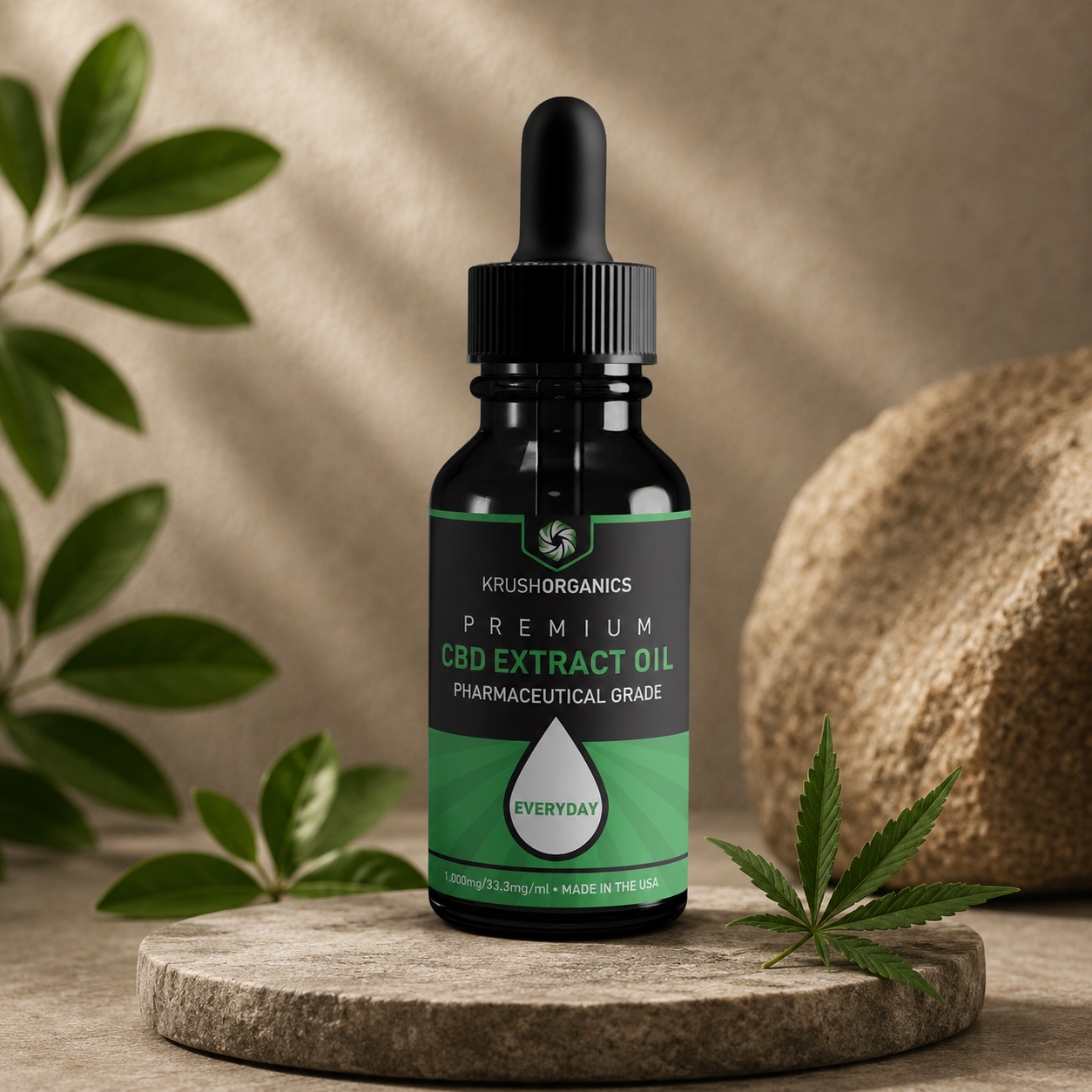
Krush Organics sits in the second category. Hemp-derived, US-manufactured, third-party lab-tested every batch, ships to every Australian state and territory. Not a TGA-registered medicine and we do not make medical claims about the products. What we do offer is transparent per-batch lab testing, precise per-millilitre dosing, and an established Australian customer base building daily routines around the range.
Krush and Chemist Warehouse CBD oil — side by side
For anyone comparing the hemp oil on the Chemist Warehouse shelf against hemp-derived CBD oil online, here is how the two options stack up on the factors Australians usually weigh before buying.
| Chemist Warehouse hemp oil | Krush Organics CBD oil | |
|---|---|---|
| Contains cannabidiol | No, hemp seed oil only | Yes, hemp-derived CBD |
| Prescription required | No for shelf hemp oil (no CBD product stocked) | No |
| Certificates of Analysis published | No, not standard for food-grade seed oil | Yes, per batch on the product page |
| Potency per bottle | Nil CBD, nutritional omega oil | 500 mg to 3000 mg per 30 ml bottle |
| THC content | Zero, no cannabinoids present | Below 0.3 percent, hemp-derived legal threshold |
| Dosing precision | Nutritional only, no CBD mg claim | Clearly labelled mg per ml, dropper included |
| Product variety | Hemp seed oil, capsules | Four CBD oil strengths plus flavoured and unflavoured options |
| Delivery | In-store across Australia, standard online postage | Tracked shipping Australia-wide |
| Refund policy | Standard chain returns | 30 day money-back guarantee |
| Typical price | $15–$40 per bottle (food-grade) | $80–$200 per bottle (CBD oil) |
The two sit on opposite sides of a product category. Hemp seed oil at Chemist Warehouse is a kitchen or vitamin-aisle purchase. CBD oil from a hemp-derived brand is a wellness-support purchase with an active cannabinoid in the bottle. Both are legal, both have their place — they just do different jobs.
How to spot a real CBD oil product
The direct-to-consumer CBD oil market has grown quickly and quality varies. For a first-time online purchase, these are the signals that separate the serious brands from the opportunistic ones.
Published Certificates of Analysis per batch. The current batch COA should be linked directly from the product page, not sitting behind an “available on request” wall. It should be issued by an independent third-party lab, dated within the last twelve months, and tied to the specific batch number printed on the bottle you receive.
A clear cannabidiol milligram figure. Serious products state the total CBD content per bottle and the mg per ml (or mg per dropper) in large print on the label. Products that only list “hemp extract” or “full-spectrum blend” without a specific CBD figure are usually hemp seed oil repackaged.
Hemp-derived, below 0.3 percent THC. This is the legal ceiling for hemp products under existing Australian import frameworks. Products marketed as above this threshold fall under marijuana classification and cannot be legally imported through hemp-product channels.
Contaminant testing on the COA, not just potency. Heavy metals (lead, cadmium, arsenic, mercury), pesticides, and residual solvents from the extraction process all need to be within safe limits. Potency-only testing does not tell the full story.
A documented refund policy. Reputable brands stand behind their product and offer one, usually thirty days.
About Krush Organics
Krush is a hemp-derived CBD brand that has been serving Australian customers since 2020. The CBD oil range is built around four strengths — 500 mg, 1000 mg, 1500 mg, and 3000 mg per 30 ml bottle — plus flavoured and unflavoured options to suit different taste preferences. Every bottle lists the per-millilitre CBD content on the label.
Every batch is independently lab-tested by an ISO-accredited facility. The current batch Certificate of Analysis is published on the product page, with potency and contaminant results clearly displayed. Products are manufactured in the US and shipped tracked to Australian addresses, with typical delivery within seven to ten business days. Every order carries a 30 day money-back guarantee.
CBD oil is used across the Australian market as part of daily wellness routines — most commonly for support around sleep quality, stress response, recovery, and general sense of calm. Individual experience varies. We are unable to make medical claims about the products, and if you are considering CBD oil for a specific health condition, the right first step is a conversation with your GP.
Frequently asked questions
Does Chemist Warehouse sell CBD oil in Australia
No. Chemist Warehouse does not sell CBD oil in Australia. The hemp oil on the shelf is hemp seed oil, which contains no cannabidiol. CBD oil is a Schedule 4 prescription-only medicine under TGA rules and is dispensed through authorised prescribers, not through standard pharmacy retail.
What is the difference between hemp oil and CBD oil
Hemp oil (hemp seed oil) is cold-pressed from the seed of the hemp plant and contains no cannabidiol. CBD oil is extracted from the flower and leaf of the same plant and contains cannabidiol as its active compound. Same species, different parts of the plant, different active ingredients.
What is the Chemist Warehouse CBD oil price
There is no Chemist Warehouse CBD oil price because Chemist Warehouse does not stock cannabidiol oil. For reference, Australian CBD oil pricing through legal channels sits around $150 to $400 per bottle for prescription medical oil, or $80 to $200 per bottle for hemp-derived oil bought online direct to consumer.
Can I buy CBD oil over the counter in Australia
Not currently through pharmacies. The February 2021 TGA rescheduling to Schedule 3 created a theoretical pathway for over-the-counter CBD, but no product has yet completed the Australian Register of Therapeutic Goods registration required to be sold under it. Hemp-derived CBD oil is available online from brands operating under hemp-product frameworks.
When will Chemist Warehouse stock CBD oil
No date is set. Chemist Warehouse would be able to stock CBD oil once a product completes the Schedule 3 pharmaceutical registration process, which requires a full dossier from the manufacturer. As of October 2026 no product has done so, and no public announcement from Chemist Warehouse exists for the category.
Is online CBD oil legal in Australia
Hemp-derived CBD oil shipped into Australia from brands operating under hemp-product frameworks is legal to purchase for personal use, provided it stays below the 0.3 percent THC threshold. The product category operates separately from the TGA medicinal cannabis pathway, which covers prescription CBD.
What strength of CBD oil should I start with
Most Australians new to CBD oil start on a 500 mg or 1000 mg bottle, which gives around 16 mg or 33 mg per ml respectively. A standard starting dose is a quarter to half a dropper once or twice per day, and most people adjust from there based on how they respond over the first week or two.
Do Krush CBD oils contain THC
Krush oils are hemp-derived and stay below the 0.3 percent THC threshold set by Australian hemp-import frameworks. That trace amount is well below the level required to produce any psychoactive effect and is standard for full-spectrum hemp-derived CBD products worldwide.
Ready to try Krush CBD oil
Four strengths. Third-party lab-tested every batch. Shipped Australia-wide. No prescription required.
This article is general information and is not medical advice. Individual responses to CBD vary. If you are considering CBD oil for a specific medical condition, please consult a healthcare professional.
Related reading: Can You Buy CBD Gummies at Chemist Warehouse · Is CBD Oil Legal in Australia · Best CBD Oil in Australia
Sources and further reading
- Therapeutic Goods Administration (TGA), Poisons Standard, Schedule 4 classification of cannabidiol
- TGA, February 2021 down-scheduling of low-dose CBD to Schedule 3
- Food Standards Australia New Zealand (FSANZ), 2017 approval of low-THC hemp seed as a food ingredient
- Australian Register of Therapeutic Goods (ARTG), registration requirements for Schedule 3 CBD products
- Office of Drug Control (ODC), hemp-product import framework and 0.3 percent THC threshold
Please note: The information provided in this article is based on general research and is not intended to replace professional medical guidance. Always speak with a healthcare professional before using CBD products, especially if you are pregnant, nursing, or managing a medical condition.
Ready to Experience Targeted Botanical Relief?
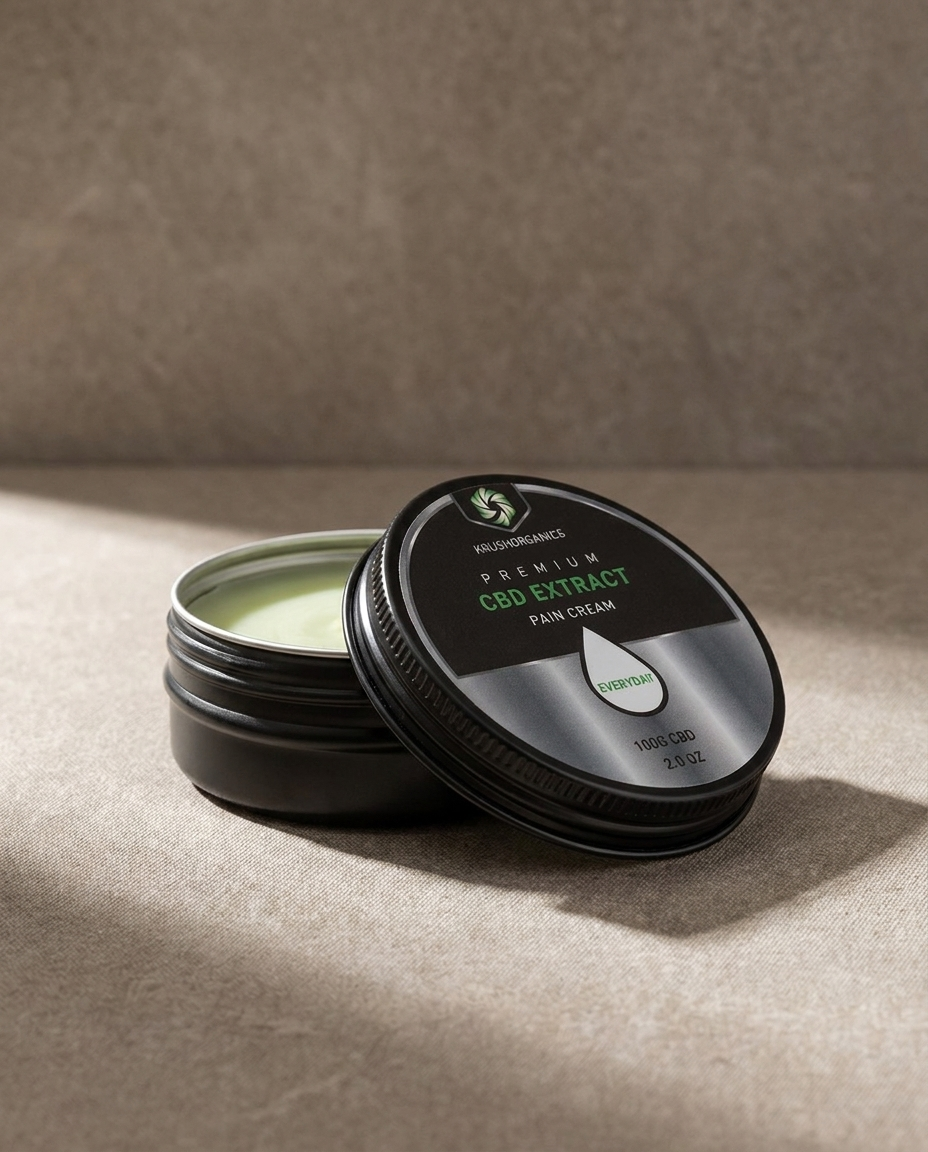
Explore our full line of organically sourced, third-party lab tested CBD tinctures, pain creams, and recovery stacks.
Shop All Products